
Facebook Marketing Agency Insights: Meta Ads in 2026
The Shift to Algorithmic Management in 2026
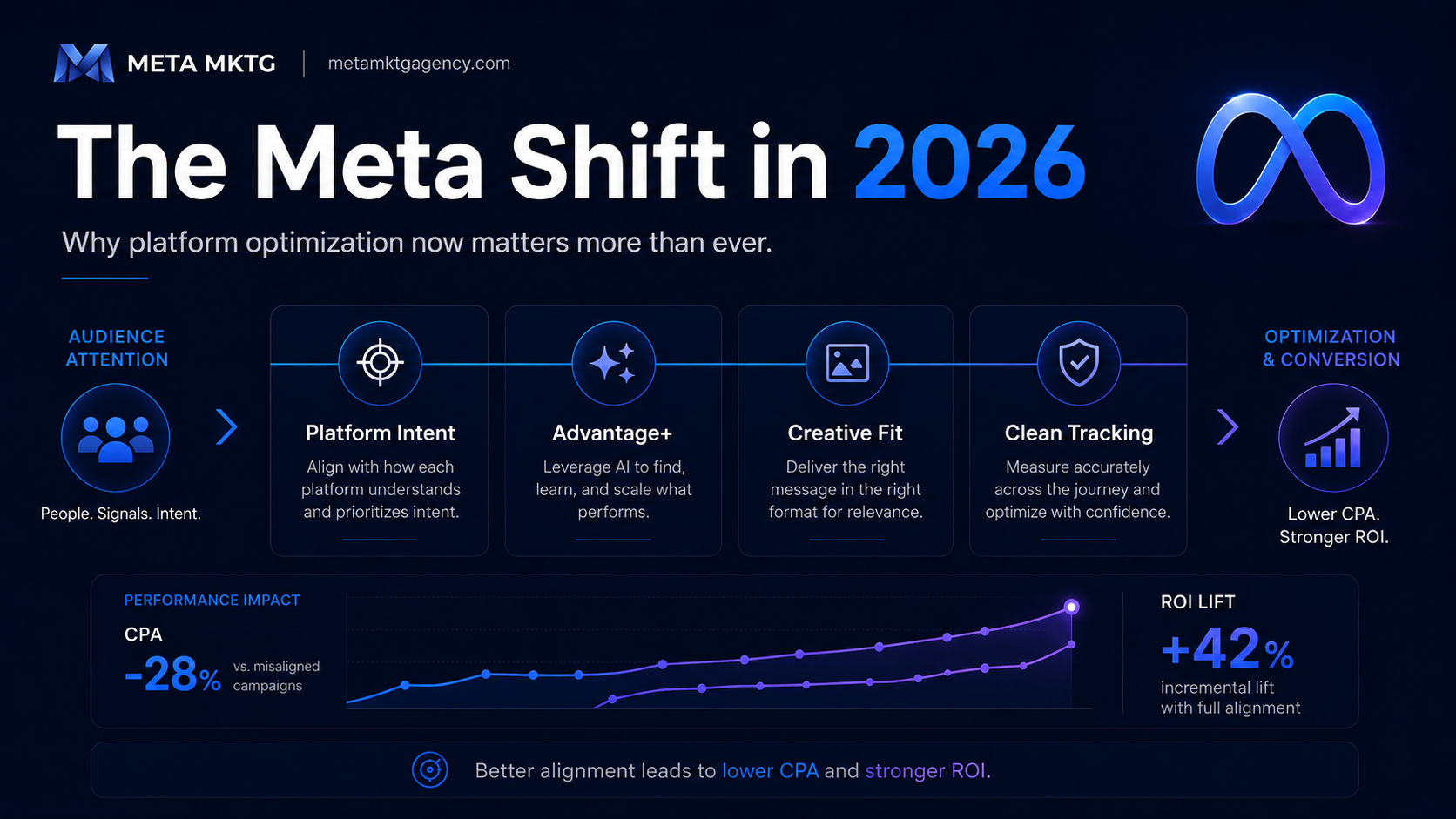
For high-growth brands and enterprise marketers, the discipline of paid social has permanently transformed. In Q2 2026, the gap between an average media buyer and an elite Facebook marketing agency lies entirely in how they interface with Meta's machine learning ecosystem.
Historically, advertisers found success through granular, manual control—segmenting audiences by hyper-specific interests and rigidly separating Facebook from Instagram. Today, attempting to micromanage Meta’s delivery algorithm (often referred to as Andromeda) actively throttles your brand's growth.
The modern role of a top-tier media buyer has evolved from a "button pusher" into a dual mandate: data engineering and algorithmic steering. We must manage the machine, not the minutiae, giving Meta the liquidity it needs to find profitable conversions across its entire ecosystem.
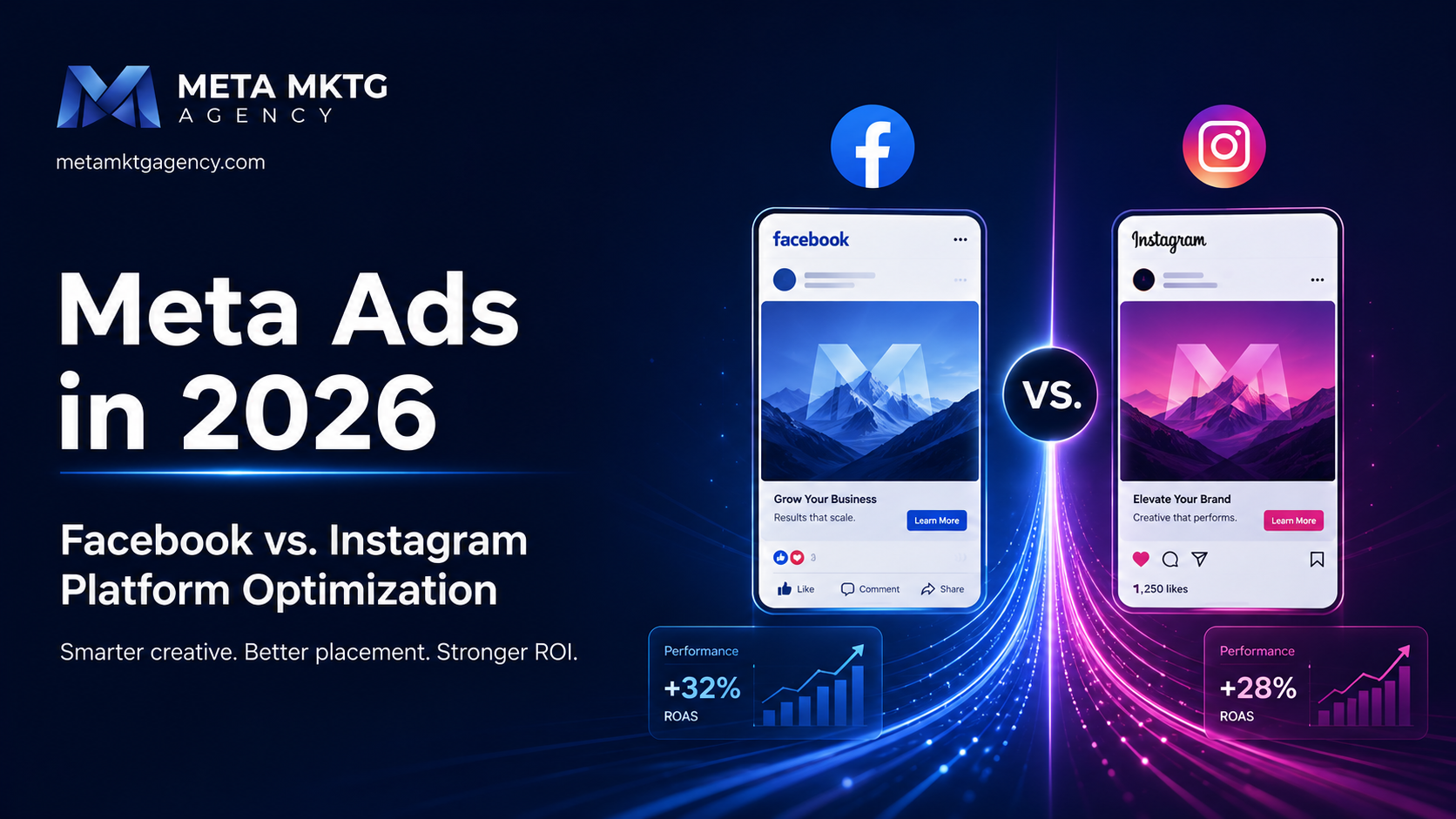
Table of Contents
- The Shift to Algorithmic Management in 2026
- Signal-Based Machine Learning: The End of Micro-Targeting
- Cross-Channel Attribution & True ROAS
- Placement-Optimized Architecture: Reels, Stories & Feed
- Why Partnering with a Facebook Marketing Agency Matters
- Frequently Asked Questions (FAQ)
Signal-Based Machine Learning: The End of Micro-Targeting
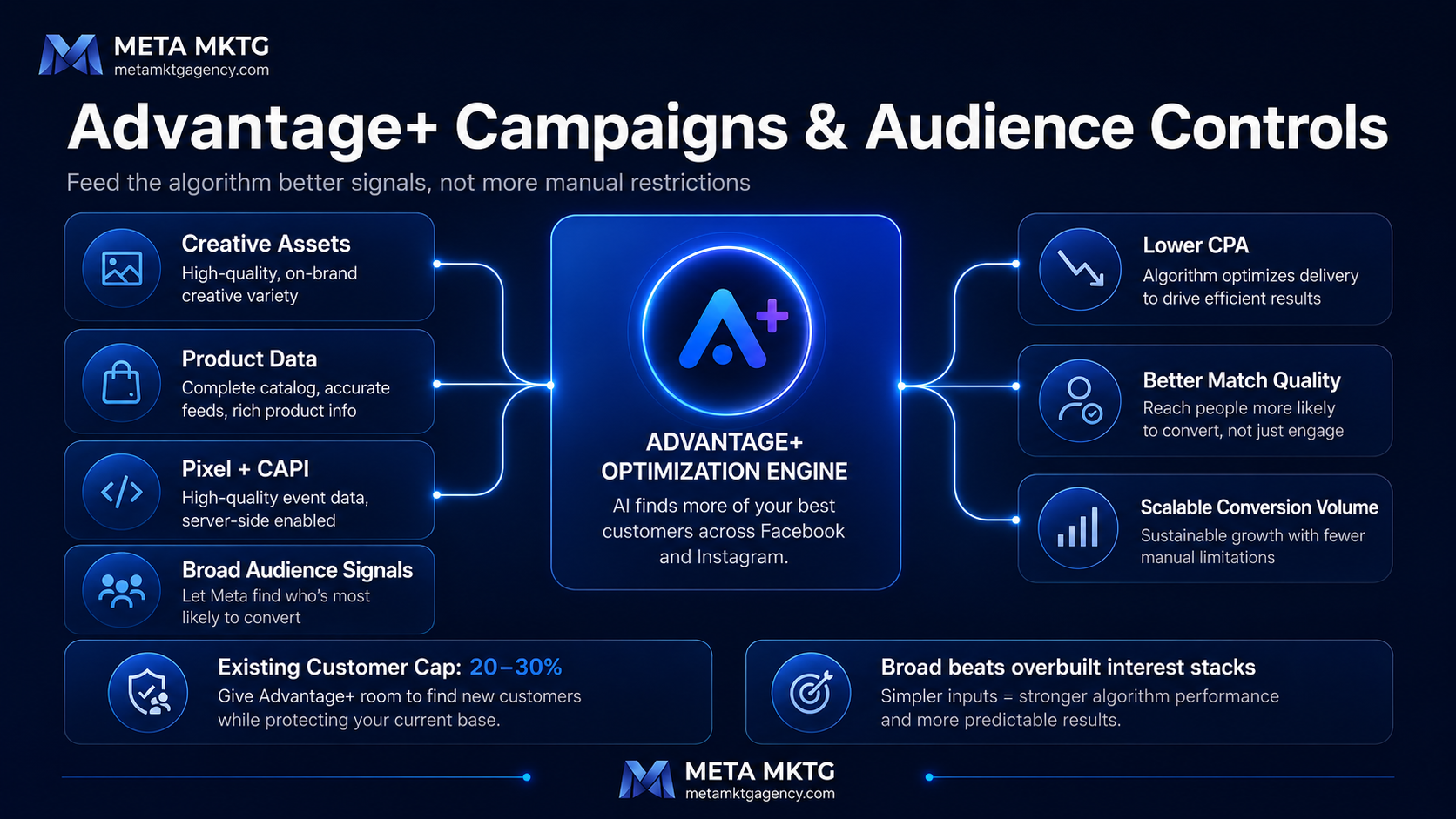
If your in-house team is still building manual lookalike audiences and stacking interests, they are operating on an obsolete playbook. In 2026, Meta advertising services are built squarely on signal-based targeting.
Instead of relying on rigid demographic inputs, Meta uses cross-advertiser conversion patterns, real-time scroll velocity, and server-side purchase data to predict buying behavior. When you launch Advantage+ Shopping Campaigns (ASC), the algorithm uses your ad creative as the primary filter.
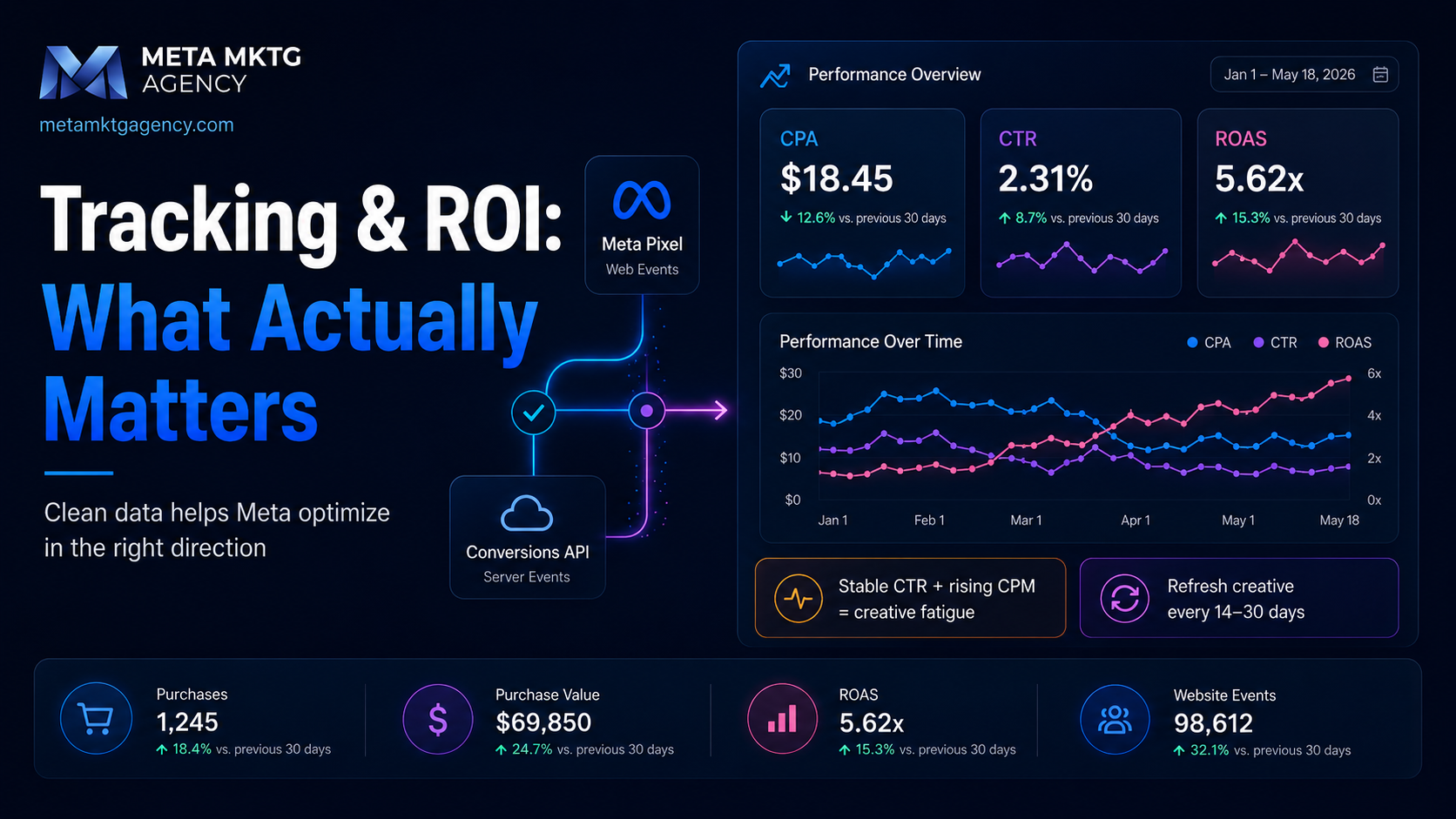
To scale profitably without choking the machine learning phase, leading agencies deploy Value Rules. Rather than forcing the AI into a narrow demographic box, we run broad targeting and apply bid multipliers. If a specific age bracket historically yields a high Cost Per Acquisition (CPA), we don't exclude them; we simply use Value Rules to decrease bids for that segment by 20%. This provides the algorithm the necessary guardrails to hunt for high-value users efficiently. To ensure your pixel is feeding the AI the right signals, a flawless Conversions API (CAPI) setup is mandatory.
Cross-Channel Attribution & True ROAS
With the evolution of data privacy, how we interpret success metrics has fundamentally shifted. Relying solely on in-platform Return on Ad Spend (ROAS) is a recipe for scaling into a blind spot.
Expert data interpretation in Q2 2026 requires looking beyond vanity metrics and click-through rates. Meta's algorithm heavily weighs "engage-through" attribution, recognizing that users often consume video content on Instagram Reels, leave the app, and search for your brand later via Google.
To understand true business impact, C-suite executives must evaluate Meta ads within an omnichannel framework. We advise our partners to measure the Marketing Efficiency Ratio (MER)—total revenue divided by total ad spend across all channels—alongside blended Customer Acquisition Cost (CAC). For insights into how top platforms view these evolving attribution models, the Harvard Business Review's perspective on AI in marketing provides excellent foundational context.
Placement-Optimized Architecture: Reels, Stories & Feed
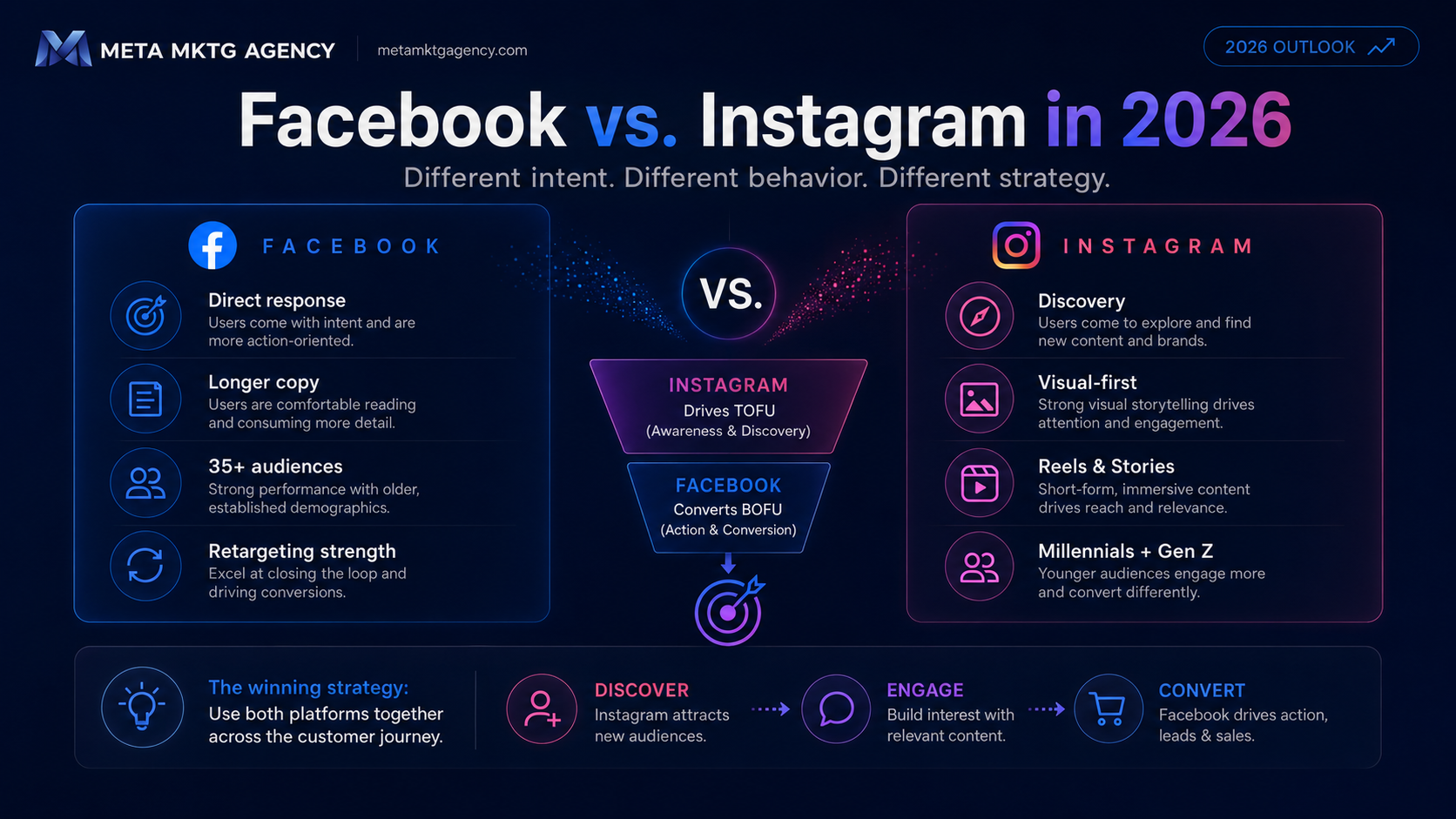
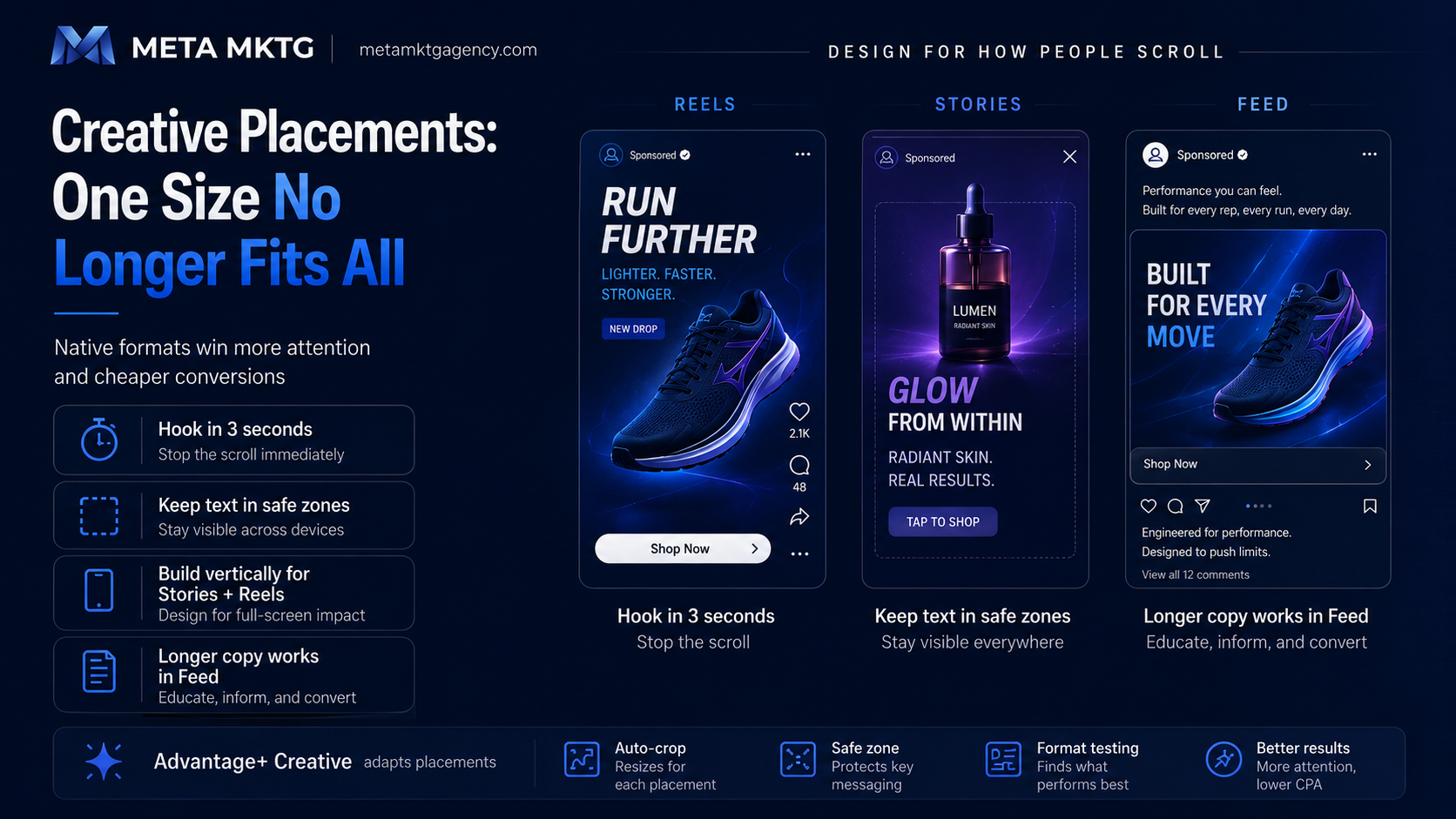
Because we are running broad audiences, creative is the new targeting. A highly produced, long-form video will naturally capture an older, affluent demographic on the Facebook Core Feed. Conversely, a fast-paced, lo-fi aesthetic will capture Gen Z on Instagram Reels.
The strategy is no longer about platform optimization (making an ad for Facebook vs. Instagram); it is about placement optimization.
- Reels & Stories: Require vertical (9:16) formatting. The hook must register within the first 1.5 seconds. If the creative feels like a traditional commercial, the algorithm will penalize its quality ranking, driving up your CPMs.
- Facebook Feed: Remains the premier placement for deep-funnel copywriting, static "us vs. them" graphics, and complex B2B or high-ticket service explanations.
To dominate the SERPs of user attention, deploy Meta's Advantage+ Creative enhancements, allowing the engine to dynamically mix and match your assets natively.
For a deeper dive into structuring these varied assets, read our agency's methodology on building high-converting funnels.
Why Partnering with a Facebook Marketing Agency Matters
Executing this level of algorithmic management requires dedicated infrastructure. Brands attempting to run broad targeting without a sophisticated backend integration often experience massive budget burn.
Partnering with a specialized Facebook advertising partner ensures that your data pipelines—specifically CAPI and offline conversion tracking—are pristine. When your data is clean, the algorithm becomes your greatest asset. We help enterprise clients consolidate fragmented ad accounts, deploy robust creative testing frameworks, and interpret the downstream financial impacts of their ad spend.
Discover how our Meta advertising services can transition your brand from manual guesswork to machine-learning mastery. Additionally, reviewing Meta’s official Business Help Center can help internal teams understand the technical prerequisites required for these advanced setups.
Frequently Asked Questions
(FAQ)
How does broad targeting actually find my ideal customers?
In 2026, Meta’s algorithm relies on real-time behavioral signals, such as scroll velocity, off-platform purchases (fed via CAPI), and video engagement. By utilizing your ad creative as the "bait," the system tests pockets of users and rapidly scales delivery to those exhibiting the highest statistical probability of conversion.
Should we separate our budgets for Facebook and Instagram?
No. Splitting campaigns by platform fragments your pixel data and prevents the algorithm from exiting the learning phase efficiently. We strongly advise using Advantage+ placements, allowing the AI to source the most cost-effective conversions across both platforms simultaneously based on real-time auction dynamics.
What are Value Rules and how do they lower CPA?
Value Rules act as algorithmic guardrails. Instead of rigidly excluding a demographic that performs poorly, Value Rules allow advertisers to decrease their bid for that specific segment (e.g., a 25% bid reduction for ages 18-24). This tells the AI to spend more efficiently without restricting its overall reach or resetting the learning phase.